
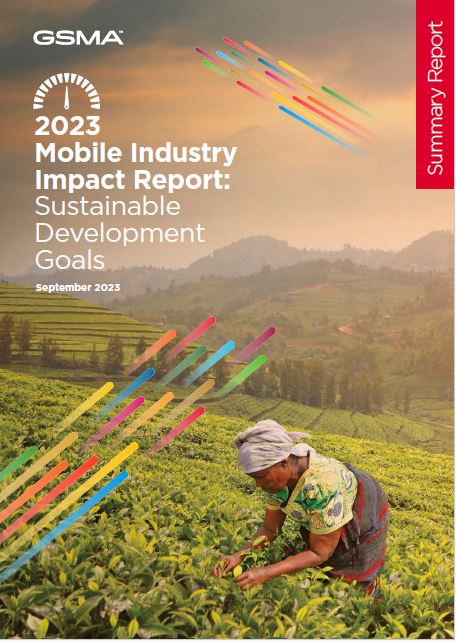
2023 Mobile Industry Impact Report: Sustainable Development Goals
This insight is open to all subscribers and registered users, or available by completing the form.
Underpinning the 2030 Agenda for Sustainable Development is a shared promise by every country to work together to secure the rights and wellbeing of everyone on a healthy, thriving planet. However, at the halfway point on the way to 2030, the Sustainable Development Goals (SDGs) are in deep trouble.
This eighth edition of the annual Mobile Industry Impact Report demonstrates the mobile industry’s continued commitment to the goals, and identifies areas where the industry needs to improve or accelerate its actions to achieve the 2030 Agenda.
Report details
2023 Mobile Industry Impact Report: Sustainable Development Goals
Download the report
Complete the form to get instant access to this content. For easier access in the future, you can register for a free account here.
By submitting this form, you agree that your email address and related activity on the platform will be processed for the purpose of generating and providing the requested report. Your data will be shared with GSMA Intelligence for this purpose. For more information, please see the GSMA Intelligence Privacy Policy.
Report details
2023 Mobile Industry Impact Report: Sustainable Development Goals
Download the report
Complete the form to get instant access to this content. For easier access in the future, you can register for a free account here.
By submitting this form, you agree that your email address and related activity on the platform will be processed for the purpose of generating and providing the requested report. Your data will be shared with GSMA Intelligence for this purpose. For more information, please see the GSMA Intelligence Privacy Policy.
Related research
Advancing digital connectivity in Africa: charting Africa's path to 1 billion connected people by 2030
Closing Africa’s connectivity gap will require coordinated action by governments, the private sector, development partners, civil society and other stakeholders to overcome persistent barriers to digital inclusion. This study provides evidence-based analysis of the structural and demand-side constraints that limit connectivity. It assesses existing digital inclusion initiatives and identifies opportunities to strengthen the ability and motivation of underserved groups to adopt and use internet services.
Digital Nations 2026: building trusted digital ecosystems in Asia Pacific
Asia Pacific is entering a new phase of digital development. As digital platforms become integral to economic activity, public services, finance, communications and emerging technologies such as AI, trust becomes a critical enabler of digital transformation. This report examines the trust imperative across Asia Pacific, examines the results of the Digital Nations Index in the context of trust, outlines the role of mobile operators as guardians of digital trust, and presents priorities for strengthening the foundations of digital trust for governments, regulators, operators and international cooperation institutions.
Closing the Mobile Connectivity Gap in Developing Asia and the Pacific
Developing Asia Pacific is home to 4.3 billion people – more than half the world’s population. However, 1.2 billion people are not online. Achieving universal connectivity by 2030 will require additional investment of around $184 billion. The economic case for closing this gap is significant. Closing the 4G connectivity gap by 2030 is estimated to deliver a GDP uplift of around $230 billion across Developing Asia Pacific. Universal connectivity would also have several wider socioeconomic benefits such as poverty reduction, improved education and health access, humanitarian assistance and lower carbon emissions. This report presents the findings from a study by GSMA Intelligence on closing the mobile connectivity gap in Developing Asia Pacific, commissioned by the Asian Development Bank.
Authors
How to access this report
Annual subscription: Subscribe to our research modules for comprehensive access to more than 200 reports per year.
Enquire about subscriptionContact our research team
Get in touch with us to find out more about our research topics and analysis.
Contact our research teamMedia
To cite our research, please see our citation policy in our Terms of Use, or contact our Media team for more information.
Learn more- 200 reports a year
- 50 million data points
- Over 350 metrics
How can we support you?
Get in touch
Contact the GSMA Intelligence support team for help with your account, subscriptions, or access to reports and insights.
Newsletter
Subscribe to the GSMA Intelligence newsletter for the latest industry news and insights, delivered to your inbox.