
IBC 2026 preview: AI moves into deployment, but changing viewing habits may be the bigger story

Author
I will be attending IBC, a major tech show for the media and entertainment industry, in Amsterdam next month (11th to 14th September), where I look forward to meeting various vendors and attending some of the conference sessions. With the event just a few weeks away, here are my thoughts on what to expect and what will matter this year.
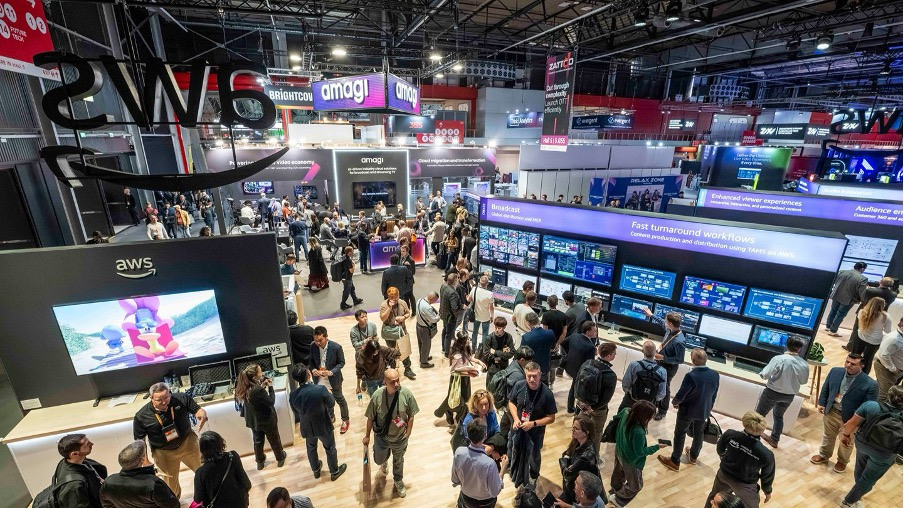
Image courtesy of IBC
AI shifts from experimentation to deployment
AI will undoubtedly be one of the dominant themes. Across 50 countries surveyed by GSMA Intelligence, enterprises from the media and entertainment sector will spend 9% of their revenues on digital transformation during 2026-2032, with AI the biggest area of spending (19% of the total spending). However, compared to previous years, the conversation is likely to be less about experimentation and more about deployment. Much of the media and entertainment industry has now moved beyond proving AI use cases and is increasingly focused on embedding AI into day-to-day operations.
Examples likely to feature across the show floor include automated subtitling and translation, AI-generated metadata, personalised recommendations and new content discovery tools.
Agentic AI is also beginning to emerge within media workflows, helping automate tasks that previously required multiple manual steps. Across the industry, the focus is shifting from what AI can do to how it can improve efficiency, reduce costs and enhance user experiences. This year’s IBC Accelerator Incubator, which counts Al Jazeera, AP (Associated Press), BBC, Channel 4, EBU, ITV, Sky, SMPTE, Reuters and Washington Post among its champions, aims to define a new open standard for story context interoperability that will enable AI-powered production tools to share structured editorial knowledge for the first time. I also expect companies such as Amagi, AWS, Dalet and Mediagenix to highlight agentic AI at IBC.
However, while AI is likely to dominate many conference sessions and exhibition stands, I believe that the more interesting story at IBC 2026 will be how the industry is adapting to changing patterns of content consumption.
Viewing habits are changing
For much of the last decade, broadcasters, pay-TV operators and streaming providers have focused on technology transformation. They launched streaming services, migrated production workflows to the cloud and modernised content delivery platforms. Increasingly, though, the challenge facing the industry is no longer technological. It is behavioural.
Viewers are consuming content differently. Discovery increasingly happens through clips, recommendations, social feeds and creator content. Audiences move between smartphones and TVs throughout the day, often discovering content through short-form formats before progressing to longer viewing experiences.
Historically, the content journey was relatively straightforward:
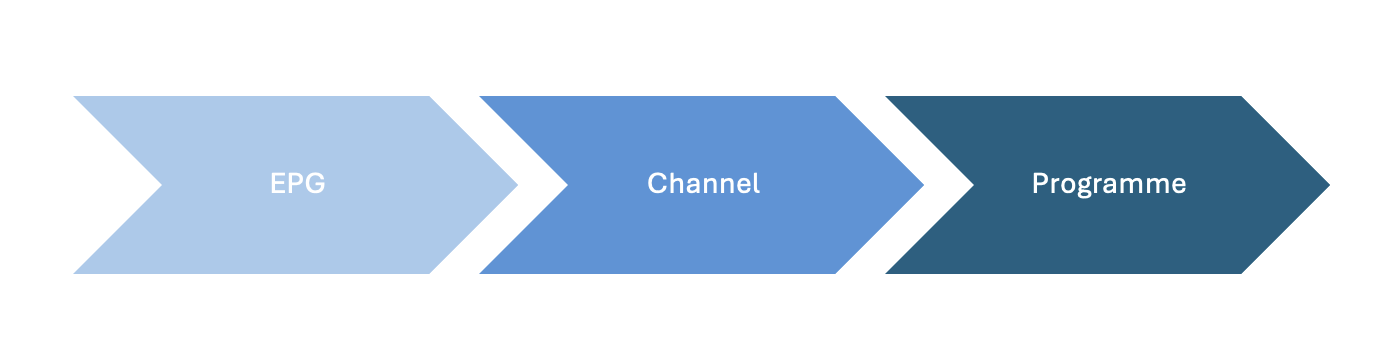
Increasingly, it looks more like:

This shift has significant implications for content producers, distributors and platform operators. User interfaces, content discovery and recommendation engines are becoming increasingly strategic as providers compete not only for viewing time, but also for attention.
I expect video platforms such as YouTube and traditional media companies such as ITV and Warner Bros Discovery, as well as vendors such as Gracenote and Xperi (TiVo) to be the most vocal on this during IBC.
Microdramas and short-form premium content
One of the most notable developments over the last 12-18 months has been the rapid rise of microdramas. Popularised initially in Asian markets, these professionally produced series typically consist of episodes lasting between one and five minutes and are designed primarily for mobile consumption.
The importance of microdramas is not that they will replace traditional TV or streaming services. Rather, they demonstrate that consumers are increasingly willing to engage with professionally produced content in shorter viewing sessions. This is particularly relevant among younger audiences who are accustomed to consuming content through mobile-first experiences.
The success of platforms such as ReelShort and DramaBox illustrates how quickly new content formats can attract substantial audiences. Whether broadcasters, studios and streaming providers choose to develop their own microdrama offerings or partner with emerging platforms is likely to become an increasingly important strategic question.
More broadly, microdramas highlight a wider industry reality: content is no longer simply competing against other video services. It is competing against all forms of digital entertainment and social media for consumer attention.
I anticipate that vendors such as inoRain and Saranyu Technologies will showcase their recent solutions for microdrama monetisation at the show.
Vertical video moves into the mainstream
Vertical video is another trend likely to attract growing attention. Historically associated with social media platforms such as TikTok, Instagram Reels and YouTube Shorts, vertical video is increasingly influencing how content is created and distributed across the broader media industry.
As audiences become comfortable switching between short-form and long-form content, broadcasters and streaming providers are being forced to think differently about production workflows and content formats: should content be produced simultaneously in horizontal and vertical formats? Can AI automate re-framing and editing? Should sports highlights, news clips and entertainment content be optimised specifically for mobile consumption?
The industry's growing interest in vertical video reflects a broader shift. Television is increasingly becoming part of a wider content ecosystem spanning multiple devices, formats and consumption models.
I expect vendors such as Backscreen and Grabyo to showcase their cross-platform, multi-format capabilities at the show.
Creator content enters the TV ecosystem
Another trend worth watching closely is the continued convergence between traditional television and the creator economy.
Creator platforms are no longer operating on the periphery of the media industry. YouTube, in particular, has become a significant player on connected TVs, increasingly competing for viewing time alongside traditional broadcasters and streaming platforms.
This has implications for how content is surfaced, recommended and monetised. Traditional media companies such as the BBC and Warner Bros. Discovery and providers of OTT video services such as Netflix are increasingly working with creators, adopting influencer-driven marketing strategies and distributing content through social and creator-led channels. At the same time, creator content itself is becoming increasingly professional and commercially significant.
Sports provides a particularly interesting example. Rights holders are increasingly complementing live coverage with personalised highlights, creator-led commentary, interactive statistics and short-form content designed for social sharing. The sports viewing experience is becoming more fragmented, personalised and multi-platform.
One of the IBC Accelerator projects, which is championed by ITV, AWS and TCS (Tata Consultancy Services) will enable “Me-Cast” scenarios, where live sports content is continuously adapted to individual viewers.
What this means for operators
For operators, these developments create both challenges and opportunities.
Historically, operators generated value by aggregating channels and providing access to content. Today, content is available through a growing range of streaming services, FAST (Free Ad-supported Streaming TV) platforms, social platforms and creator ecosystems. As a result, the challenge for consumers increasingly shifts from access to discovery.
Some operators are already adapting. Comcast has been expanding its aggregation strategy through StreamStore and Xumo, bringing together streaming services and free ad-supported content within a common environment. Sky and Deutsche Telekom have similarly focused on creating more unified content discovery experiences that bring together linear TV, streaming services and online video.
The next step may be extending these aggregation models beyond traditional television and streaming. As new content categories emerge, operators could integrate creator content, short-form video services and eventually microdrama platforms alongside existing content offerings. Sports could evolve in a similar way, with operators combining live events, highlights, clips and personalised viewing experiences within a single interface.
AI can help enable this transition through conversational search, content recommendations and personalised discovery. Meanwhile, commercial models such as subscription aggregation, content marketplaces, dynamic bundling and ad-supported services create additional opportunities for differentiation.
Ultimately, operators have an opportunity to evolve from distributors of channels to aggregators of viewing experiences. In a market characterised by fragmented content and fragmented attention, helping consumers find relevant content quickly may become one of the most valuable functions they can provide.
Additional resources
GSMA Intelligence has various resources enabling clients to better understand the pay-TV and OTT video markets from a variety of angles:
How can we support you?
Get in touch
Contact the GSMA Intelligence support team for help with your account, subscriptions, or access to reports and insights.
Newsletter
Subscribe to the GSMA Intelligence newsletter for the latest industry news and insights, delivered to your inbox.

- 200 reports a year
- 50 million data points
- Over 350 metrics
How can we support you?
Get in touch
Contact the GSMA Intelligence support team for help with your account, subscriptions, or access to reports and insights.
Newsletter
Subscribe to the GSMA Intelligence newsletter for the latest industry news and insights, delivered to your inbox.