
MWC Las Vegas 2024: AI, IoT and NTNs support the digital transformation of enterprises
Access this insight with a Standard plan. Contact our sales team to get started.
Or
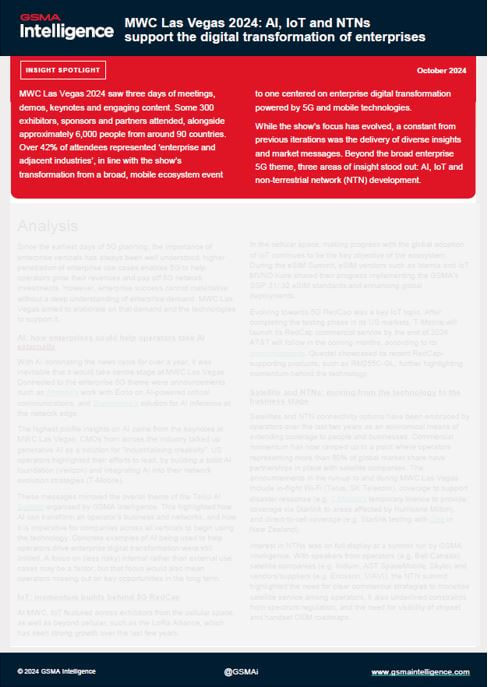
MWC Las Vegas 2024 saw three days of meetings, demos, keynotes and engaging content. Some 300 exhibitors, sponsors and partners attended, alongside approximately 6,000 people from around 90 countries. Over 42% of attendees represented ‘enterprise and adjacent industries’, in line with the show’s transformation from a broad, mobile ecosystem event to one centered on enterprise digital transformation powered by 5G and mobile technologies.
While the show’s focus has evolved, a constant from previous iterations was the delivery of diverse insights and market messages. Beyond the broad enterprise 5G theme, three areas of insight stood out: AI, IoT and non-terrestrial network (NTN) development.
Report details
MWC Las Vegas 2024: AI, IoT and NTNs support the digital transformation of enterprises
More info
This report is one of more than 140 published annually as part of the GSMA Intelligence data and research subscription, which is designed for organisations that require regular access to our insights. Contact our sales team for details.
Contact usReport details
MWC Las Vegas 2024: AI, IoT and NTNs support the digital transformation of enterprises
More info
This report is one of more than 140 published annually as part of the GSMA Intelligence data and research subscription, which is designed for organisations that require regular access to our insights. Contact our sales team for details.
Contact usRelated research
MWC Shanghai 2026: 6G, sovereignty and AI monetisation come to the fore
With a 33% rise in international visitors this year, MWC Shanghai speaks to China’s influence and gravitational pull on the regional Asian tech economy and reciprocal demand from buyers to see and be seen on the MWC stage in an already busy event calendar. The analysis here highlights the key takeaways and implications from the meetings, summits and announcements at the event.
The winner, the biggest mover and the surprise: what operators focused on at MWC 2026
GSMA Intelligence's Chart of the Month is a visual way of telling an important story in the mobile and broader tech ecosystem. From the shape and size of markets to trends in consumer behaviour, we aim to provide food for thought through informative visuals designed to bring colour and clarity to complex issues facing the industry. This edition looks at which topics telecoms operators focused on at MWC Barcelona 2026.
Sovereignty at MWC Barcelona 2026: the content consensus
For much of 2025 and early 2026, the development of sovereign AI and sovereign digital service strategies – including the role telecoms could play in supporting them – was regularly in the news. For operators, the strategies represent an opportunity to support national agendas, reassert their relevance in the digital economy and drive new revenues based on their position as highly regulated and trusted service providers. This analysis looks at the sovereign messaging conveyed in sessions at MWC from operators, vendors, regulators and cloud providers.
Authors
How to access this report
Annual subscription: Subscribe to our research modules for comprehensive access to more than 200 reports per year.
Enquire about subscriptionContact our research team
Get in touch with us to find out more about our research topics and analysis.
Contact our research teamMedia
To cite our research, please see our citation policy in our Terms of Use, or contact our Media team for more information.
Learn more- 200 reports a year
- 50 million data points
- Over 350 metrics
How can we support you?
Get in touch
Contact the GSMA Intelligence support team for help with your account, subscriptions, or access to reports and insights.
Newsletter
Subscribe to the GSMA Intelligence newsletter for the latest industry news and insights, delivered to your inbox.