
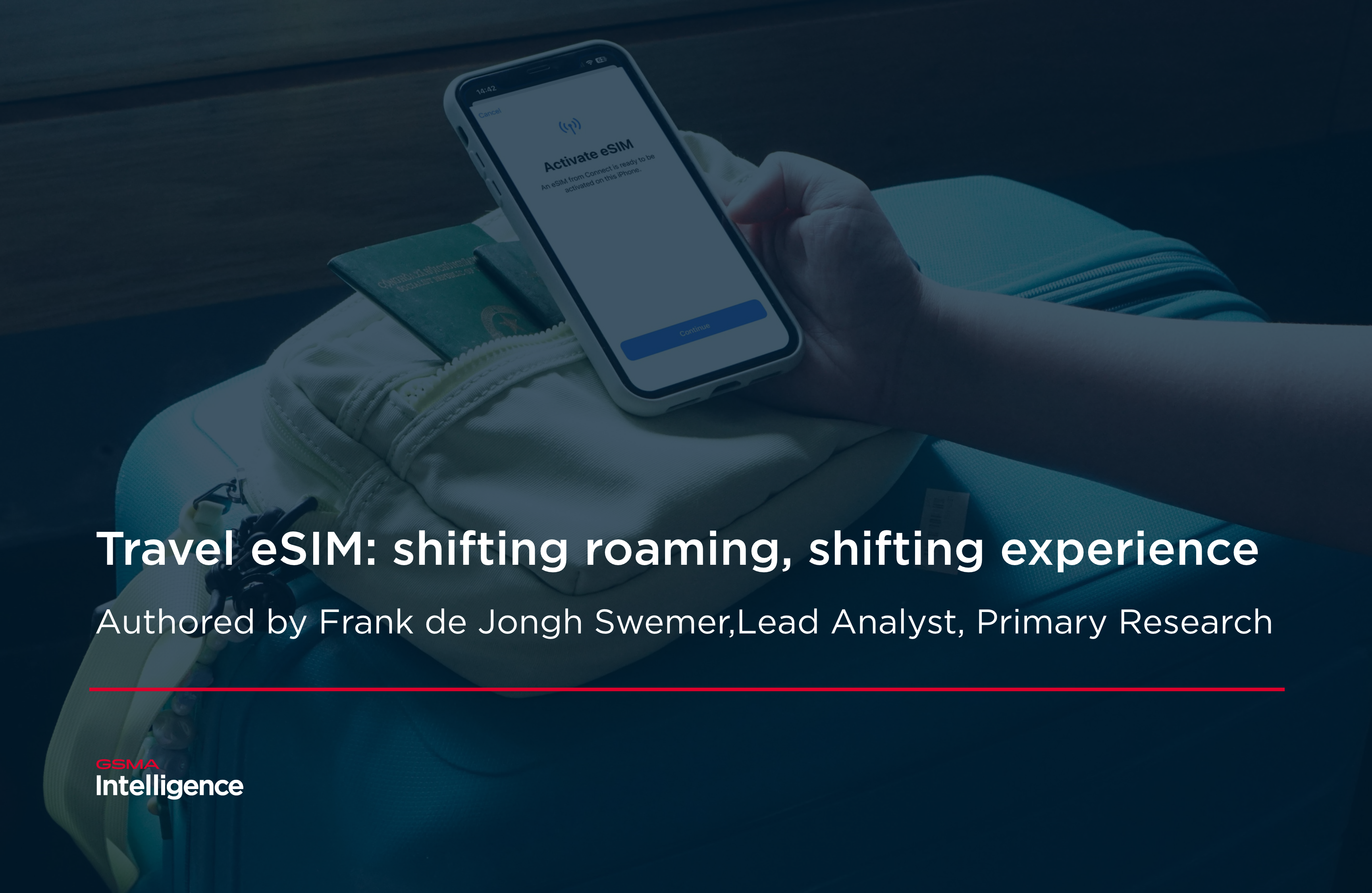
Travel eSIM: shifting roaming, shifting experience
Author
As I was doing some research for my upcoming solo trip to Japan in April, I remembered I also wanted to check which Travel eSIMs were available, as these might have changed since my last trip.
Being lucky and having visited Japan and Asia many times over the last decades, I appreciated the development of this technology and cost saving these bring me when roaming abroad. I previously paid my home network £6+ per day to use my iPhone in Japan. Luckily these days are now over, and I pay c. £13 for 10 GBs of data, which should be enough for a 10-day adventure in the land of the rising sun. Gone are the days where I would be hit with an extra charge of £80 for roaming. The money I am saving on this trip can go towards delicious Egg Sando’s (Sandwiches) from 7 Eleven.
Evolution of the market for Travel eSIMs
I first caught on to travel eSIMs for roaming in 2022, when I was targeted by advertising, probably on Instagram. Working in research even before joining the GSMA, I explored the topic and research the options available for Japan. After selecting the best option for my needs, I downloaded my first Travel eSIM to my iPhone. I recall finding the initial process a bit clunky but figured it out eventually. I recall that I was delighted when I got the service to work when first landed in Tokyo for that trip. I have never paid my home provider for roaming since.
In recent year, the Travel eSIM has emerged as a successful use case for travellers. It supports expanded use of mobile connectivity when travelling (consider ‘silent roamers’, for example), delivering the true concept of mobility everywhere. Adoption continues to grow and so has the number of providers. From our most recent GSMA Intelligence Consumer survey, on average across 11 major countries surveyed, 12% of consumers who took international trips in the past 12 months used eSIM while travelling abroad. Among these, more than 70% used telco eSIM services, whereas the rest used travel eSIM services from a growing list of non-telco companies (e.g. Airalo, Ubigy, Instabridge and others).
During the planning for my upcoming trip, I noticed that the website I was using for one of my hotel bookings, Trip.com, was offering a free 1 GB eSIM for using their app for my booking. This was in addition to site having given me a 3 GB eSIM for reaching the next level in their loyalty programme.
Clearly Travel eSIMs have evolved into becoming an additional revenue stream for travel companies or a perk with other services. Some banks, such as Revolut in the UK, have now started to include a Travel eSIM with some of their top packaged bank accounts. With this move, these companies create a new revenue stream, whilst also increasing the overall value of their proposition. As the amount of inclusive data is restricted, it is likely customers will need to purchase additional data, as they travel, so bringing in additional revenue.
Not all services are the same
Aiming to get a deal, I always check the available travel eSIM options before my next trip. Sometimes prices change, sometimes discount codes are available. One thing I did discover is that not all travel eSIM services are the same.
Some providers seem to restrict the data speeds after using a certain amount of data per day, whilst others allow the usage of only certain apps, such as maps, messaging and non-video based social media. The latter seems to be the case with some of the free travel eSIMs provided. Furthermore, some providers seem to only offer 4G speeds, whilst others offer the fastest 5G speeds available.
During my research, I also noticed that a provider giving good value in for example Japan, might be less good value if needing an eSIM for Hong Kong or Taiwan. Price per GB seems to vary a lot provider by provider. Hence, I always shop around and have a couple of Travel eSIMs installed on my iPhone and use the one that is best value for my destination. Another thing to consider is also length of validity of the data package. Some companies data packages expire after a week, whilst others allow 30 days.
One thing that users should consider is access to their home services and apps, as a travel eSIM will use a local IP address. This might restrict access to certain apps, which might be blocked in the country of travel, such certain social media apps and services. Something to consider, if important when travelling.
Consumer behaviour
Having worked in consumer research, I suspect not many consumers will be willing to shop around to find the best value Travel eSIM for each country they visit.
My parter for example finds the entire process a bit frustrating and has one provider eSIM installed on his phone. He will just use that service to buy data to roam in whatever country he might be visiting and as such do not bother installing another eSIM and App to get a better deal.
I suspect most consumers would follow that model. It is likely still better value than roaming with their home network and more convenient, as they already have the eSIM installed on their device.
When using a travel eSIM, most mobile phones allow you to keep your home SIM active as the secondary SIM for voice services. This will ensure you can still receive SMS messages for normal identity for comms or one-time passwords. My network does not charge me for receiving SMS’ when roaming, so logging in to services with multi-factor authentication is not impact, which might not be the case for other networks. However, the only drawbacks might be to listen to voicemails, as in most cases a call back to the home country is required.
In the coming months, GSMA Intelligence will be again running its annual Consumer Survey. We are currently exploring ways to dive deeper into the usage, awareness and potential adoption of Travel eSIMs amongst consumers in the sampled countries.
Impact on mobile operators
For the mobile operators, competing head-on with low-cost travel eSIM solutions could potentially cannibalise traditional roaming revenues. However, instead operators could focus on differentiators in their marketing and propositions, such as brand value, voice services (which global providers cannot offer), customer service, and end-to-end user experience.
Ever since first discovering Travel eSIMs, I have continued using them in countries where I do not get inclusive roaming from my home network. I estimated that for my various long-haul trips since 2022, I have saved £630 on roaming costs. Hence, I am not surprised that some mobile network operators have started offering Travel eSIMs to their own customers and as a new revenue stream for other Global customers. Both Orange and Vodafone in Europe have launched these propositions and I suspect more will follow using their strong brand names.
Anyway, back to planning my trip. Happy travels.
How can we support you?
Get in touch
Contact the GSMA Intelligence support team for help with your account, subscriptions, or access to reports and insights.
Newsletter
Subscribe to the GSMA Intelligence newsletter for the latest industry news and insights, delivered to your inbox.

- 200 reports a year
- 50 million data points
- Over 350 metrics
How can we support you?
Get in touch
Contact the GSMA Intelligence support team for help with your account, subscriptions, or access to reports and insights.
Newsletter
Subscribe to the GSMA Intelligence newsletter for the latest industry news and insights, delivered to your inbox.