
Nokia CMD 2025: A Puzzling Private Networks Pivot

Nokia Capital Markets 2025 at a glance:
On 19 November 2025, Nokia used its annual Capital Markets Day (CMD) to unveil a new strategy aimed at repositioning the company around the AI-driven transformation of global networks. At a high level, Nokia announced it will reorganise its operations into two business segments: a “Network Infrastructure” unit focused on AI-ready networks and data-centre growth, and a “Mobile Infrastructure” division covering core and radio networks, including emerging 6G technologies.
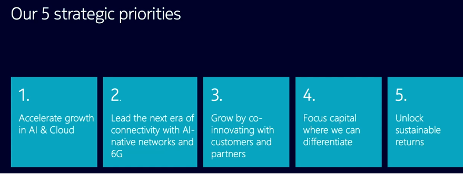
The new Nokia strategy and its 5 strategic priorities introduced in Nokia Capital Markets Day in November 2025, source link
Nokia plans to move certain business units into a dedicated operating segment called “Portfolio Businesses”, as shown in the visual below.
These units, among which is Enterprise Campus Edge “are not seen as core to the future of the company’s strategy” and the company will “assess the best value-creating opportunity for them”.
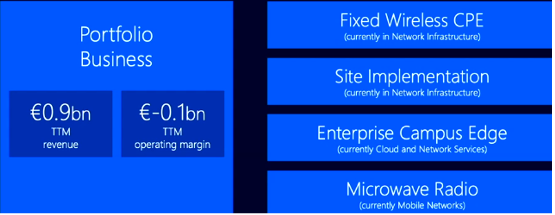
The Portfolio Business and its components, likely to be divested from, seen as non-core to Nokia’s future
In a clarifying statement post the CMD, Nokia said that following:
- “Nokia continues to sell radios for private wireless deployments together with Nokia and third-party core.”
- “Nokia’s key customer segments include not only telcos and AI & Cloud, but also mission-critical enterprises including defense (e.g, public safety, utilities, railways). “
- “Nokia’s leadership position and commitment to private 5G market remains unchanged. “
Despite the clarification, the strategic shift raises several big questions about the future of private networks within Nokia.
Taking a step back
In 2021, Nokia introduced a new strategy that put the Enterprise segment at the centre of expansion. Enterprise became the number two customer segment target after telcos.

Nokia’s 2021 strategy and its 6 strategic priorities, source link
In MWC 2023, Nokia updated its strategy and introduced new branding that signalled “focus on B2B technology innovation to drive digitalization across every industry.” Enterprise came at the core of the strategy even stronger and the goal for the enterprise segment was to achieve faster growth and increase its contribution to Nokia’s total revenue mix.
To achieve this, Nokia built on momentum with private LTE mainly in so-called mission critical industries (i.e. utilities, railways, public safety) it served already since 2014. Since 2018, the company ramped up portfolio launches and expanded to larger enterprise base with several network products, devices and platforms, some of which are outlined in the visual below.
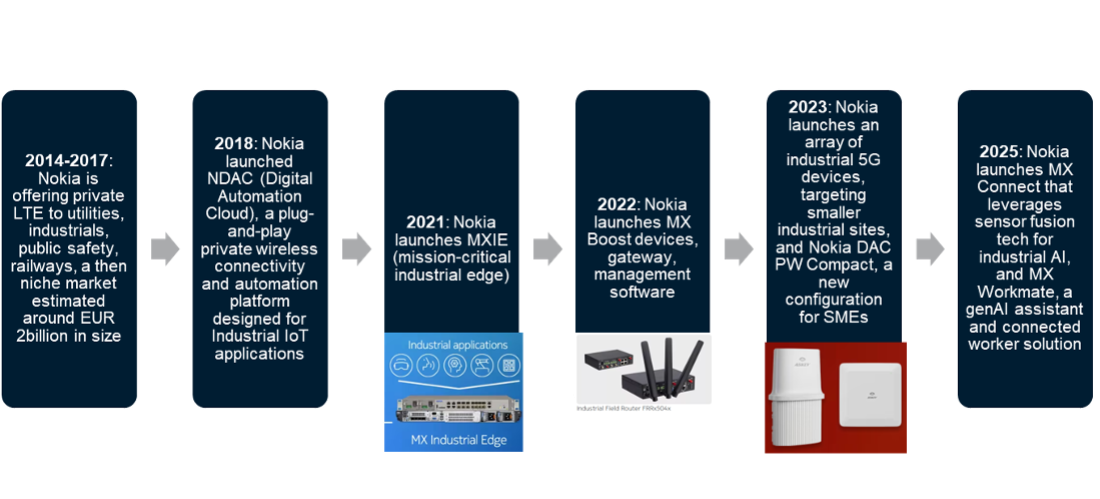
Nokia Enterprise portfolio launches timeline (non-exhaustive), source GSMA Intelligence
What does a new Nokia strategy actually mean for its private networks business?
A part of Nokia’s private networks portfolio is put under the Portfolio Business, meaning they are seen as non-core to the future of the business. This part of Nokia private wireless portfolio are understood to include:
- The Enterprise Campus Edge, the software-as-a-service private networks solution it designed for SMEs, industrial companies, smaller factories and warehouses.
- The industrial device portfolio, e.g. Nokia DAC compact, and likely the drone product and end-to-end solution targeted at cities and public safety sector.
- The end-user industrial applications and integrations it achieved with industrial platforms, e.g. MX Connect, industrial AI Sensor Fusion, MX Workmate, MXIE Datalake.
Despite putting Enterprise Campus Edge and several devices under the “Portfolio Business”, Nokia clarified that they intend to stay in the private networks business, except the focus will be only on Mission Critical Enterprise (MX Enterprise), that also includes Defence.
What might be a positive aspect of this shift?
By refocusing only on the Mission Critical (MX) segment, Nokia is effectively returning to its 2014-2018 positioning: serving large, mission-critical enterprises with private wireless. This is a strategic backtracking for the sake of greater focus and cost cutting of seemingly loss-making items of the portfolio. In addition, at first impression, the focus seems to turn to a higher value segment, as the value of the average MX project is typically higher than the average “non-MX” project (e.g. a warehouse or smaller manufacturing plant).
Several questions and concerns persist
1. How much of cost savings
Nokia does not disclose the size of the “non-MX” segment within its private wireless Portfolio Business, but reasonable assumptions can be made. In 2024, Nokia’s Enterprise revenue totalled EUR 2.18 billion, including roughly EUR 500 million from webscale customers, implying about EUR 1.6 billion attributable to the broader private networks portfolio. Using Nokia’s filings and making assumptions about split of customers base into mission-critical and non, the “non-MX” component likely represents between EUR 100–300 million of this total. Targeting this segment is strategically defensible: given Nokia’s own view that this largely “non-MX” market is growing at 20%+ CAGR, and the fact that the product is already proven with early adopters, the strategic rationale for pursuing it remains clear.
2. Is the estimated 11% loss margin that bad?
Let’s assume the 11% operating loss margin that all the units in the Portfolio Business collectively had applies to the “non-MX” part of private wireless portfolio. Nokia’s estimated 11% operating loss compares favourably to Ericsson’s 2024 Enterprise segment EBITDA of -16%, suggesting Nokia’s operations may be on comparable or stronger footing. This assumes close similarity between the two companies’ Enterprise portfolios, even though it is not a like-for-like comparison, and that EBITDA typically exceeds operating profit, though this can vary with amortisation costs. Therefore, such operating losses may be acceptable if a company aims to capture market share in fast growing markets.
3. Commercial prospects of new MX-focused strategy aren’t too rosy.
- Based on Nokia’s CMD 2025, enterprise MX is set to grow 11% CAGR from 2025-28 which is equal, if not lower than the 11.56% CAGR Nokia achieved across its overall Enterprise business in 2021-24. Private wireless, in particular, grew faster, with Nokia projecting a 22% CAGR for 2024-29 in its annual report. Outside China, Nokia holds a leadership position, likely with over 50% market share, indicating growth above the market average. This suggests that Nokia’s previous strategy - which included operating the non-MX, loss-making segments - was already delivering similar or better growth than the new MX-focused strategy aims to achieve.
- Planned 11% CAGR carries execution risks. To reach MX and defence revenue targets, Nokia acquired US defence firm Fenix Group for an undisclosed sum. Unlike realised organic growth, acquisitions bring integration and talent-retention risks. It’s unclear whether these have been fully factored into Nokia’s MX growth plan.
Moreover, although MX projects are generally more lucrative, sectors such as defence, large utilities, rail and public-safety agencies involve very long sales cycles. In contrast, the non-MX segments Nokia has already started penetrating offer larger volumes, faster deal flow and more dynamic opportunities. The shift toward slower-moving MX markets therefore risks dampening enterprise momentum and limiting the visibility of Nokia’s actual innovation footprint.
4. Failing to capitalise on early-mover advantage.
Despite loss-making and being smaller compared to the MX Enterprise part of the private wireless business, the non-MX side is associated with a series of innovations that Nokia tested and refined with actual deployments.
- Nokia brought to market SaaS-native products, fit for businesses of different size and needs.
- Through the partnership with Intel, it introduced vRAN for private wireless – an innovative product that responded to actual customer demand for flexible deployment models at lower cost.
- During last few years, Nokia streamlined its business model as well; it successfully introduced recurring revenue model in enterprise campus edge and various innovative charging models, i.e. expanding charging for network access requests, data volume, location requests.
5. The risk of leaving the market at unfavourable timing
- Edge computing is becoming strong again, driven by AI inference, sovereignty and security demands. With its SaaS-ready edge platform, the Fenix “Banshee” tactical 4G/5G portfolio and several industrial integrations, Nokia is well placed to compete and cement further advantage.
- Despite being at very early stages, Nokia’s product, business and charging model innovations introduced through its private wireless business, will be foundational for monetising network technologies in the AI and 6G-era networks Nokia aims to lead. Stepping away now risks having to re-enter later from a weaker position and at higher cost.
Conclusion
Overall, and despite reassurance that Nokia remains in the private wireless business, this strategic pivot announced at CMD 2025 reshapes Nokia’s Enterprise trajectory. While parts of the shift may be defensible, it raises questions about timing, strategic clarity and whether the move strengthens or undermines Nokia’s longer-term opportunities.
Author

- 200 reports a year
- 50 million data points
- Over 350 metrics
How can we support you?
Get in touch
Contact the GSMA Intelligence support team for help with your account, subscriptions, or access to reports and insights.
Newsletter
Subscribe to the GSMA Intelligence newsletter for the latest industry news and insights, delivered to your inbox.